

A knitwear order that passes inspection at the sample stage can still fail in the market. The gap between a garment that satisfies a buyer in the sampling room and one that satisfies an end consumer three washes later is closed by the same set of decisions: how the sample is validated, what the capacity plan assumes, and how many units each colourway actually justifies. This article covers the product-side mechanics of small-MOQ custom knitwear programmes, from sampling through to colourway planning.
What a Sample Actually Validates
Sampling is often treated as a single approval gate. In practice it validates four independent things, and a programme that confirms only one of them carries risk into bulk production.
- Construction — gauge, stitch density, neckline and placket geometry, and whether the trim components sit where the tech pack places them
- Fibre and blend — that the yarn delivered matches the specified composition, verifiable by test report rather than by appearance
- Colour — that the dyed lot matches the approved reference under the lighting conditions the end market will use
- Fit — at the actual measurement points, on the actual size grading that bulk will follow
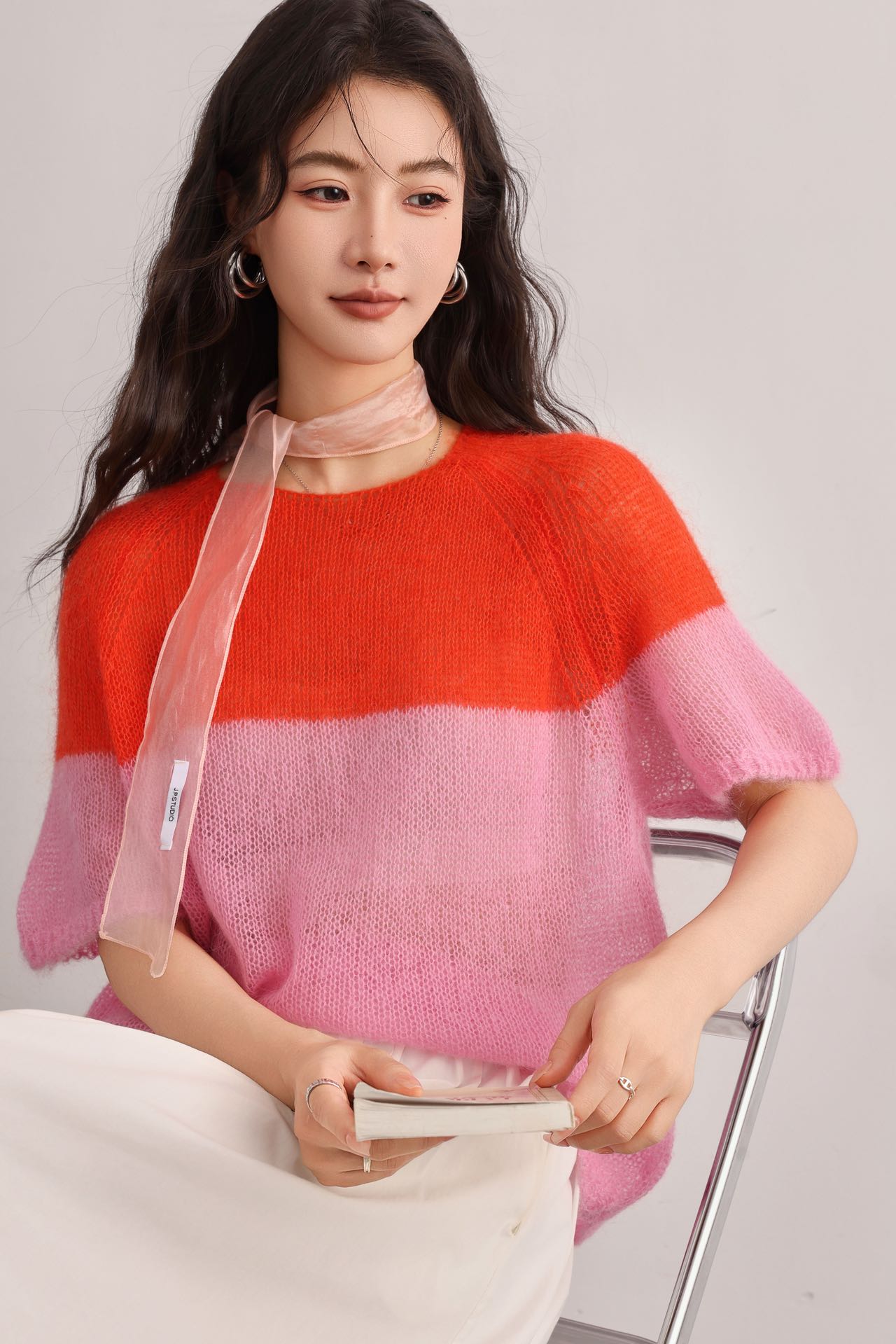
The fourth point is where fine-gauge knitwear demands particular attention. A 16-gauge fabric drapes differently from a 12-gauge fabric at the same nominal dimensions, so a fit approved on one gauge does not transfer to the other. Jabot-style details, detachable components such as a scarf trim, and faux two-piece constructions each introduce an additional panel that must be validated in the sample rather than assumed in bulk.

Low MOQ and What It Changes
Low minimum order quantity is a genuine commercial advantage when launching or testing a new brand, and it is one of the capabilities our own programme is built around. It also changes the economics of the programme in ways worth planning for explicitly.
| Programme element | Effect at low MOQ | Planning consequence |
|---|---|---|
| Yarn sourcing | Mill order quantities for a specific yarn may exceed the garment order | Confirm yarn availability per colour before committing to a colourway count |
| Dye lot consistency | Small dye lots are harder to match across repeat orders | Retain an approved physical swatch and specify it as the reference for repeats |
| Colourway count | Each colourway carries its own setup regardless of unit volume | Fewer colourways at higher depth usually beats many colourways at low depth |
| Repeat ordering | Repeat runs reopen a closed production slot | Book repeat capacity in advance if the style is expected to sell through |
Capacity and Turnaround as Design Inputs
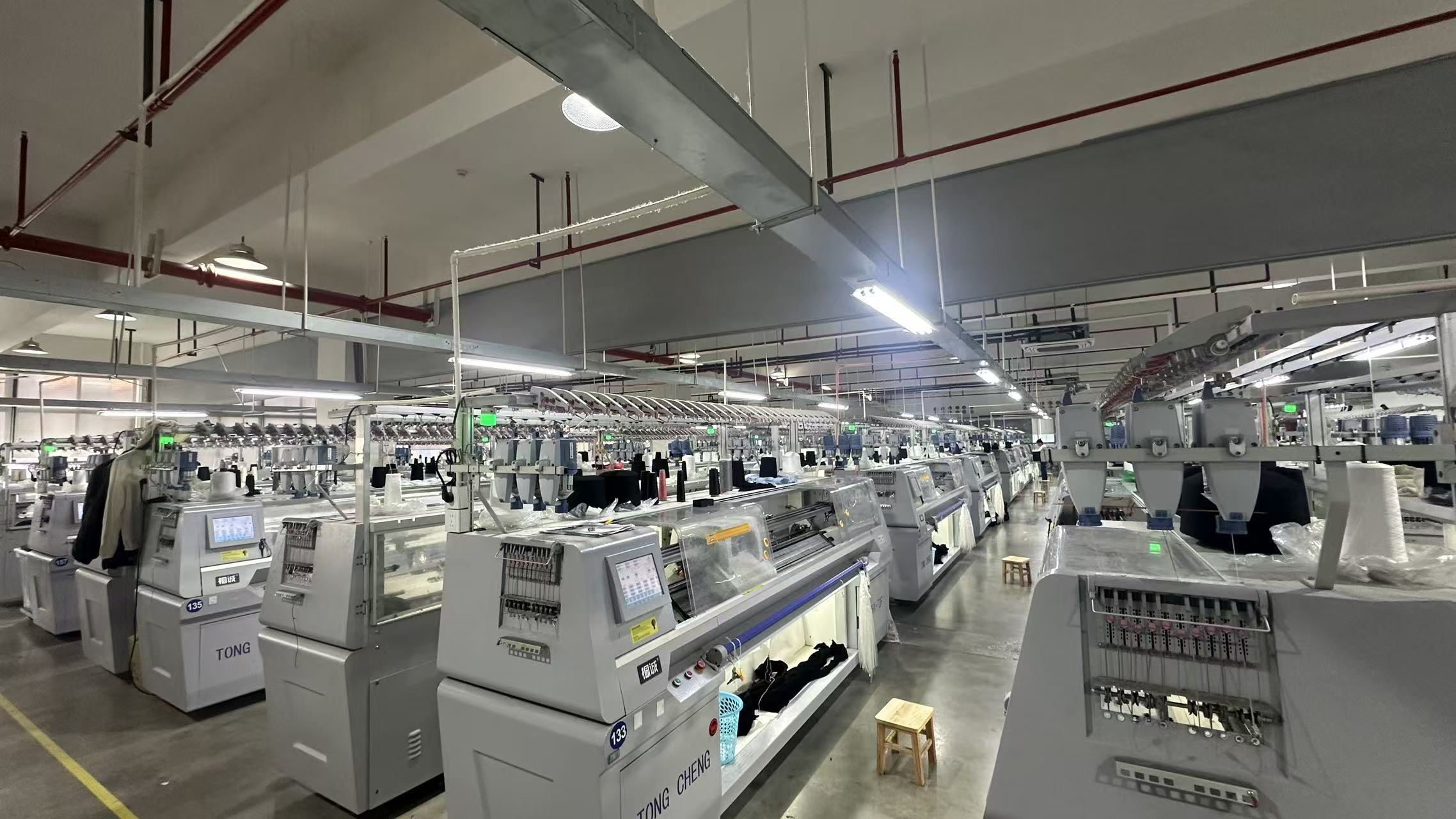
Turnaround is frequently treated as a logistics question that arises after the design is fixed. It is more useful as a design input. A programme built on advanced production lines and a stable team can run small and bulk orders through the same workflow, but only if the style was designed for that workflow from the start.
Three design decisions determine how smoothly a style moves through production:
- Number of panels and components — a detachable scarf, a separate placket, or a faux two-piece front each adds an operation and an inspection point
- Patterning complexity — a fine jacquard design adds machine time per panel relative to a solid knit of the same gauge and weight
- Colour blocking and striping — multiple yarns in one garment increase the risk of a mismatch at the join and require tighter yarn inventory control
None of these are reasons to avoid a design. They are variables that should be named when the delivery date is agreed, so the schedule reflects the garment that was actually ordered.
Building a Colourway Plan That Survives
Colourway decisions are usually made on the strength of how the range looks rather than how it will sell, and that is where margin quietly disappears. A workable colourway plan follows three rules.
Anchor on a core, then extend. Every programme should carry at least one colourway that can be reproduced reliably at volume across repeat orders. Classic whites, blacks, deep navies, and neutral greys serve this role because they match against a stable reference and tolerate dye-lot variation better than saturated fashion shades.
Price the setup, not just the unit. The cost of adding a colourway is dominated by setup and yarn procurement rather than by the incremental units. A programme of three colourways at moderate depth almost always delivers better unit economics and better delivery reliability than six colourways at half the depth.
Match the colour to the fibre and the wear position. Colour retention behaves differently across fibres. Wool-rich performance blends specified with anti-fading performance hold their shade across repeated laundering, which makes them the right vehicle for the colourways that must survive a full season. Fashion-forward shades with a short shelf life can be placed in limited colourways where the style is the reason for purchase rather than the colour.
Customisation Scope: What Can Be Changed and What Cannot
A customisation programme is only useful if both sides share the same boundary. The scope that can be varied without rebuilding the product is wider than most buyers assume, and it helps to see it laid out.
Fully flexible elements: design and silhouette adaptation, fabric and blend selection, colourway and dyeing, logo printing and labelling, and packaging format. These are the dimensions a full OEM/ODM programme is built to vary.
Constrained elements: the gauge of the machine available for a given style, the minimum yarn order quantity for a specific fibre, and the achievable colour-matching tolerance for a highly saturated shade on a wool-rich base. Each of these has a real limit that is worth establishing during sampling rather than after an order is confirmed.
Elements to fix early: the measurement specification and size grading. These are expensive to change once bulk yarn has been committed, and they are the single most common cause of a repeat order that does not match the original.
Frequently Asked Questions
How many colourways should a first knitwear order include?
For a first order, three is a practical starting ceiling: one reproducible core shade that can be reordered at volume, plus two fashion shades to give the range range. Each additional colourway adds setup cost and yarn procurement risk that is hard to justify before the style has demonstrated sell-through.
Can a sample approved in one gauge be produced in another?
The fit and drape will not transfer. Gauge determines fabric thickness and recovery behaviour, so a measurement set approved on a 16-gauge fabric does not apply unchanged to a 12-gauge version of the same style. Treat a gauge change as a new sample requirement rather than a production adjustment.
What should be confirmed before committing to a colourway count?
Two things: yarn availability in each colour at the required order quantity, and the dye-lot matching tolerance the mill can hold for that specific shade on that specific fibre. Both are answerable before the order is placed and both are expensive to discover afterwards.
How does fibre blend affect colour retention?
Blends specified with anti-fading performance hold their shade more reliably across repeated laundering than pure natural fibres in highly saturated shades. Where a colourway must survive a full season of washing, the blend specification is a more reliable lever than the dye recipe alone.
Conclusion
A small-MOQ custom knitwear programme succeeds or fails on decisions made before bulk production starts: which gauge the fit was validated on, whether the yarn exists in the colours ordered, how many colourways the setup cost can justify, and whether the delivery date reflects the number of operations the style actually contains. Each is knowable at sampling stage. A programme that resolves them there enters production with a schedule and a specification that hold — and repeats cleanly on the next order.